
TL;DR
Yes, you can sell a house with code enforcement issues in Indianapolis. The main question is what the violations involve and whether there are unpaid fines, liens, or repairs that need to be addressed. You may choose to fix the problems before listing, or you may be able to sell the property as-is. The right choice depends on the condition of the house, your budget, and how quickly you want to move on.
Can You Sell a House With Code Enforcement Issues?
Yes, although the process may look a little different from selling a house in good condition.
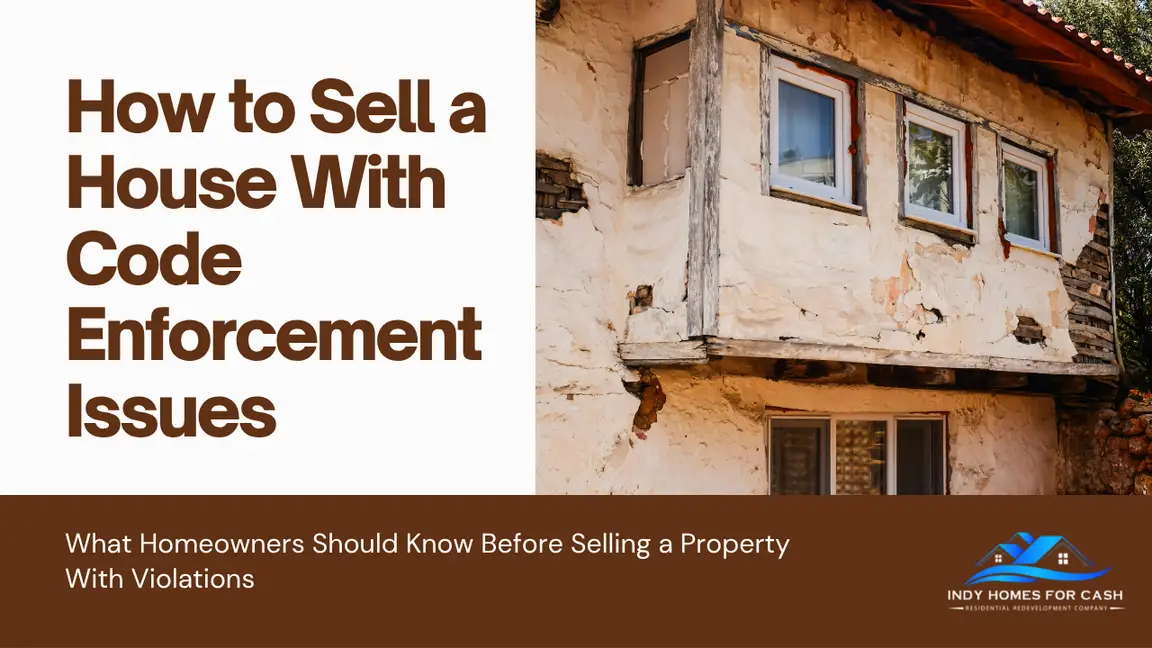
Code enforcement problems can range from something relatively simple, like an overgrown yard, to more serious concerns involving the roof, foundation, electrical system, plumbing, or structural safety.
If you’ve received a violation notice, don’t assume you have to fix everything immediately. Start by finding out exactly what the city is asking you to correct. Once you know what you’re dealing with, you can decide whether making the repairs makes financial sense.
What Are Common Code Enforcement Violations?
Code violations can happen for many reasons. Some of the more common ones include:
- Damaged roofs
- Broken windows or doors
- Unsafe stairs or railings
- Electrical problems
- Plumbing issues
- Structural damage
- Unpermitted additions
- Unsafe buildings
- Excessive trash or debris
- Overgrown vegetation
- Property maintenance violations
- Problems with vacant or abandoned homes
The severity matters. A minor maintenance violation is much different from a property that has been declared unsafe.
Do You Have to Fix Code Violations Before Selling?
Not necessarily.
Some homeowners decide to make the repairs because they want to attract traditional buyers and potentially get a better price. Others realize the work would cost more than they want to put into the property.
For example, if a vacant house needs a new roof, electrical work, plumbing repairs, and extensive cleanup, the total bill could become significant. You may not want to put that kind of money into a house you’re planning to sell anyway.
In that situation, an as-is sale could be worth considering.
If you want to compare your options, you can learn more about selling a house to Indy Homes for Cash.
Can You Sell a House As-Is With Code Violations?
In many cases, yes.
Selling a property as-is means you’re selling it in its current condition rather than agreeing to make it move-in ready.
That doesn’t mean you can ignore known problems or avoid required disclosures. Buyers still need accurate information about the property, and certain violations may need to be dealt with before closing.
The benefit is that you don’t necessarily have to take on a major renovation project just to get the house ready for the market.
What Happens to Outstanding Code Enforcement Fines?
This is something you should find out before putting the property under contract.
Depending on the situation, a property may have unpaid fines, assessments, liens, or other charges connected to code enforcement.
These obligations can affect the sale and may need to be resolved before or during closing.
Rather than guessing, request an updated record of what is owed. A title company or real estate attorney can also help determine whether anything attached to the property needs to be cleared before the transaction can close.
Can a House With a Lien Be Sold?
A lien doesn’t necessarily make a sale impossible.
However, it can complicate the transaction because the lien generally needs to be addressed before the buyer receives clear title.
In some cases, the amount owed can be paid from the proceeds of the sale. The exact process depends on the type of lien and the circumstances surrounding it.
If you’re unsure whether your property has a lien, it’s worth finding out early rather than discovering it right before closing.
Should You Repair the House Before Selling?
That depends on what the repairs will cost and what they are likely to add to the property’s value.
Before hiring contractors, consider:
- How much will the repairs cost?
- Are permits required?
- How long will the work take?
- What will the house realistically sell for afterward?
- Are there other problems that could appear once work begins?
- Do you have enough money to complete the project?
A small repair that makes the property much easier to sell may be worthwhile. A major renovation may not be.
There’s no reason to spend $30,000 repairing a property if the work only adds $20,000 to its eventual value.
What If You Can’t Afford the Repairs?
This is where things can become difficult for homeowners.
You may have a property with serious violations but not have the cash available to correct them. Borrowing money for repairs may not make sense, particularly if you’re already trying to get rid of the property.
Selling the house in its current condition can be an alternative.
A direct buyer may be willing to evaluate the property based on its current condition instead of expecting you to complete the repairs first.
If speed is important, you can also explore options for selling your house fast in Indianapolis.
What If the Property Has Been Vacant?
Vacant houses can become a bigger headache over time.
Grass needs to be maintained, leaks need to be caught, and damage needs to be addressed before small problems become expensive ones. A neglected property may also attract additional attention from code enforcement.
If you’re living somewhere else and don’t want to keep paying for a property you’re no longer using, selling may make more sense than continuing to maintain it.
Traditional Listing vs. Selling Directly
You generally have two choices when selling a property with significant problems.
Listing With a Real Estate Agent
A traditional listing gives you access to buyers looking for homes on the open market.
However, you’ll need to consider the possibility of:
- Repairs before listing
- Cleaning and preparation
- Showings
- Inspections
- Repair negotiations
- Financing issues
- A longer time on the market
If the property has serious violations, some buyers may decide not to move forward after the inspection.
Selling Directly
A direct sale can be simpler if you’re more concerned with avoiding repairs and getting the property sold than preparing it for a traditional listing.
You can request a cash offer from Indy Homes for Cash and use the offer as one point of comparison. You don’t have to accept it, but having another option can help you decide what makes sense.
What Information Should You Gather Before Selling?
Before talking with buyers, try to collect whatever information you have about the property.
This may include:
- Code enforcement notices
- Inspection reports
- Repair estimates
- Permit records
- Information about unpaid fines
- Lien notices
- Previous contractor records
Having these documents available makes it easier to explain the property’s situation and can help prevent surprises later.
How Do Code Violations Affect Home Value?
There’s no fixed amount that a code violation takes off a home’s value.
A minor violation may have little effect. A house with serious safety problems could be worth considerably less because the buyer has to account for the cost and uncertainty of correcting them.
For example, if a buyer expects to spend $25,000 bringing a property up to code, they’re likely to factor that expense into their offer.
The property’s location, size, condition, and potential after repairs also matter.
How Indy Homes for Cash Can Help
If you’re dealing with a house that needs substantial work, Indy Homes for Cash gives you another selling option to consider.
You don’t necessarily have to renovate the property before asking what it could be worth. The house can be evaluated based on its current condition, including the work that may be needed.
This can be particularly useful for homeowners dealing with vacant properties, inherited houses, deferred maintenance, or several problems at once.
The important thing is to compare your choices before committing to a major repair project.
Frequently Asked Questions
Can I sell a house with code violations in Indianapolis?
Yes. Code violations don’t automatically prevent a property from being sold, although certain issues may need to be resolved before closing.
Do I have to bring the house up to code before selling?
Not always. Some properties can be sold in their current condition, depending on the circumstances and the requirements attached to the violations.
Can I sell a house with unpaid code enforcement fines?
Possibly. Outstanding fines may need to be paid or otherwise addressed as part of the transaction.
Can I sell a condemned house?
It may be possible, but a condemned property presents additional legal and practical issues. Find out exactly what restrictions apply before attempting to sell.
Will code violations lower my home’s value?
They can. Buyers usually consider the cost of repairs, permits, fines, and other work when deciding what they’re willing to pay.
Can a cash buyer purchase a house with code violations?
Some cash buyers purchase properties that need significant repairs. The offer will depend on the home’s condition, location, estimated repair costs, and other factors.
Is it better to repair the house or sell it as-is?
It depends on the numbers. Compare the cost of repairs with the price you could reasonably expect after completing them. Also consider how much time and effort the project will require.
Final Thoughts
Code enforcement problems can make selling a house more complicated, but they don’t necessarily leave you without options.
Before spending money on repairs, find out what the violations involve, whether there are outstanding fines or liens, and what it would realistically cost to bring the property up to code.
From there, you can compare a traditional listing with an as-is sale. For some homeowners, repairs will be worthwhile. For others, selling the property in its current condition may be the more practical choice.
If you’re considering a direct sale, you can get a cash offer from Indy Homes for Cash and compare it with the other options available to you.